
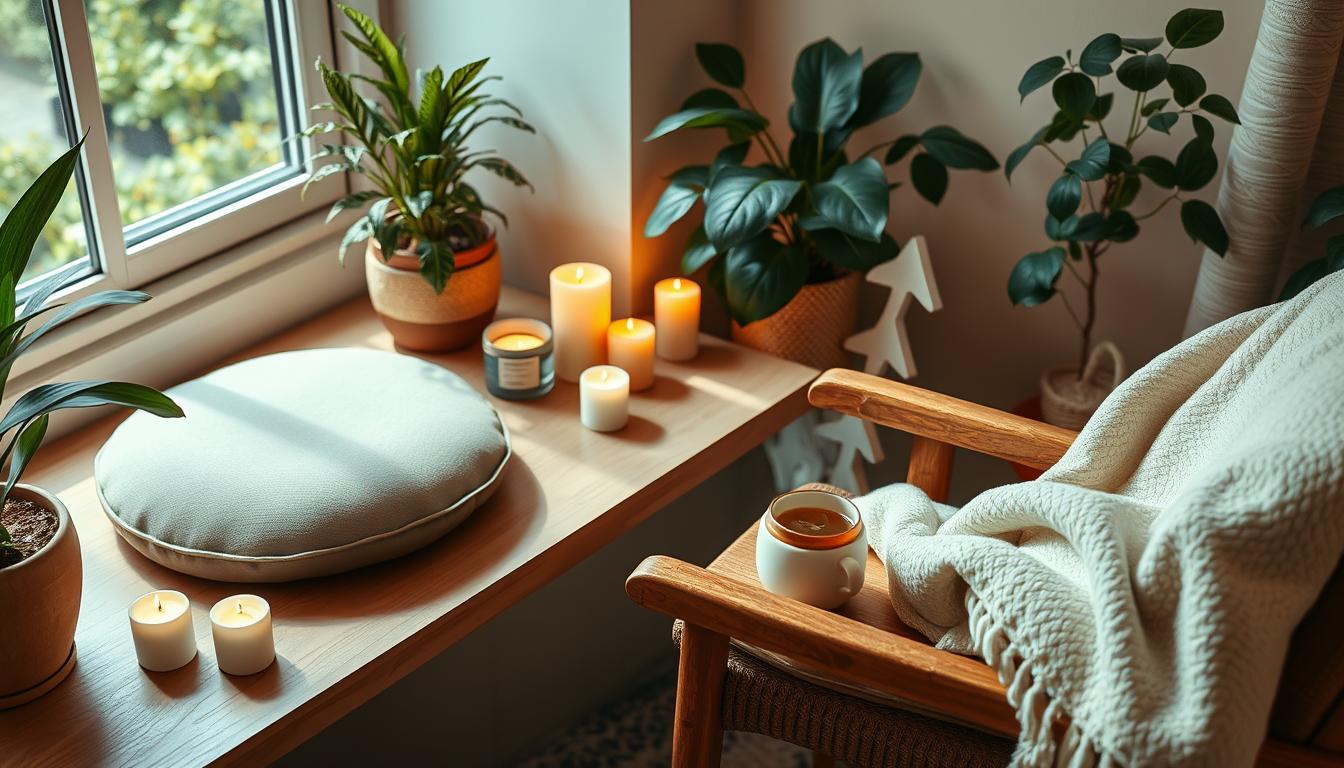
Stress is a big problem that affects many people around the world. It causes feelings of anxiety and tension. Finding ways to reduce stress is key to feeling better mentally and physically.
Adding simple stress management techniques to your daily routine can help a lot. These shortcuts can greatly reduce anxiety and help you relax. Learning how to manage stress is important for a healthier life.
Understanding Stress and Its Effects
Stress can deeply affect both our minds and bodies. It can cause anxiety, depression, and weaken our immune system. To find good relaxation methods, we need to know how stress works. This helps us understand its impact on mental health and wellness.
By spotting the signs of stress early, we can start working towards a healthier life. We can add wellness tips to our daily habits.
Long-term stress can cause many issues, like mood swings and heart disease. So, taking care of our mental health is key. We should try different relaxation methods to lessen stress. Activities like meditation, deep breathing, or yoga can help.
Knowing how stress affects us helps us take action. We can manage stress better and live a better life. Adding wellness tips to our daily life, like exercise and healthy food, is important. By focusing on relaxation methods and mental health, we can avoid stress-related problems and stay well.
Recognizing the signs of stress and taking proactive steps to manage it can have a significant impact on overall health and wellbeing, allowing individuals to lead a happier, healthier life.
Benefits of Stress Relief Shortcuts
Adding simple stress relief techniques to your daily routine can greatly reduce stress. Self-care practices like meditation and yoga boost mood and productivity. They also improve physical health. Regular mindfulness exercises help clear your mind, making it easier to face life’s challenges.
Stress relief shortcuts also increase energy levels. Using breathing techniques like deep breathing or progressive muscle relaxation can fight fatigue. This leads to better productivity and a stronger immune system, helping you tackle daily tasks more easily.

By using stress relief shortcuts, you can actively manage stress and improve your health. Whether through self-care practices, mindfulness exercises, or breathing techniques, there are many simple ways to reduce stress. Adding these techniques to your daily life can significantly improve your quality of life.
Stress relief is not a one-size-fits-all solution, but a personalized approach. It requires patience, dedication, and self-awareness. By exploring different techniques and finding what works best for you, you can start a journey towards a happier, healthier life.
Quick Breathing Techniques for Instant Calm
Deep breathing exercises are a great way to reduce stress. They offer many benefits that you can feel right away. Adding physical activity to your day can also boost your mood and lower stress.
For example, a short walk during lunch can clear your mind and make you feel calmer. Using aromatherapy benefits with deep breathing can make it even more effective. Scents like lavender and chamomile can help you relax and feel less anxious.
One big plus of deep breathing is that you can do it anywhere, anytime. It’s perfect for people with busy lives. Just a few minutes of focusing on your breath can make you feel more calm and centered.
As you breathe deeply, inhale slowly through your nose, hold it for a few seconds, and then exhale slowly through your mouth. This can slow your heart rate, lower your blood pressure, and bring you peace.
Combining deep breathing with other stress-relief methods like physical activity and aromatherapy benefits can help you manage stress better. Try different creative stress relief methods to find what works best for you. Don’t be afraid to try new things as you work towards a more relaxed and balanced life.
Mindfulness Practices for Stress Relief
Practicing mindfulness is a strong stress management technique. It helps people relax deeply and find inner peace. By focusing on now and letting go of past or future worries, stress levels drop. Mindfulness, like mindful meditation, is simple to learn and fits into daily life.
Deep breathing is a key part of mindfulness. It means taking slow, focused breaths, feeling the breath move in and out. Doing this regularly can lower stress and anxiety. It also boosts wellness tips for a healthy life. Mindfulness can also be mixed with activities like yoga or walking to work better.
Starting with simple exercises is key for beginners. Try guided meditations, body scans, or mindful walks. Adding these to your day can increase self-awareness, reduce stress, and improve well-being. The American Heart Association says mindfulness can also help heart health.
By cultivating mindfulness, we can learn to approach life’s challenges with greater ease, clarity, and compassion.
By using these stress management techniques and relaxation methods, you can start a mindful, relaxed, and healthy life. Always remember to prioritize wellness tips and make time for self-care and relaxation every day.

Physical Activities to Reduce Stress
Doing physical activities is a great way to lower stress and anxiety. It makes us feel better overall. Exercise releases endorphins, which are like natural happiness pills. They help us feel less anxious and happier.
Adding physical activities to our daily lives is key to a healthier lifestyle. It’s a way to take care of ourselves. This helps us feel better and live a happier life.
There are many exercises that help with stress, like walking, jogging, yoga, and swimming. These activities help us release physical tension. They also let us focus on the moment, which calms our minds.
By mixing physical activity with mindfulness, we can feel really relaxed. This mix helps us deal with stress better.
Physical activities fit into many lifestyles and preferences. They’re easy to add to our daily routines. Whether it’s a quick walk or a yoga session, it helps a lot with stress.
By making physical activity a part of our lives, we build strong habits. These habits help us manage stress and improve our health and happiness over time.
Regular physical activity can help reduce stress and anxiety by releasing endorphins and promoting relaxation. By incorporating exercise into daily routines, individuals can develop healthy habits that foster overall well-being and resilience.
Utilizing Nature for Stress Relief
Nature greatly impacts our mental health, providing a natural stress relief. Spending time outside, in parks, forests, or by water, calms us. It reduces anxiety and helps us relax. Nature is key for our mental well-being.
One top wellness tip is to spend time in nature. Just walking in a park or hiking can calm us. Being in nature also offers chances for exercise, like hiking or biking, which lowers stress.

Adding nature to our daily lives is simple. Starting a backyard garden or having plants on a balcony is a good start. Gardening is calming and reduces stress. Being around nature brings peace and is vital for our mental health and well-being.
Nature is not only a source of comfort and solace but also a powerful tool for reducing stress and promoting wellness tips. By incorporating nature into daily life, individuals can find peace and tranquility in the natural world, which is essential for maintaining good mental health and overall well-being.
Aromatherapy: Using Scents to Soothe Stress
Aromatherapy is a well-known stress relief shortcut that uses essential oils to calm the mind and body. It’s a great way to lower stress and anxiety through self-care practices. Oils like lavender and chamomile are known for their calming effects, making them perfect for anxiety reduction.
To start with aromatherapy, you can use a diffuser to spread the scent of your chosen essential oil. This method is excellent for creating a peaceful environment and helping with stress relief shortcuts in your daily routine. You can also apply essential oils to your skin, but remember to mix them with a carrier oil to avoid irritation.
Aromatherapy not only helps you relax but also boosts your mood and lessens anxiety. By adding aromatherapy to your self-care practices, you can enjoy many benefits. These include lower stress and anxiety, better sleep, and a happier mood. Whether you’re looking for a quick fix or a long-term solution for anxiety reduction, aromatherapy is a great choice.
By taking a few minutes each day to practice aromatherapy, you can reduce your stress and anxiety and improve your overall well-being.
In summary, aromatherapy is a simple yet powerful way to find peace and reduce stress and anxiety. By making it a part of your daily self-care practices, you can enjoy many benefits and enhance your life quality. So, why not try it out and see how aromatherapy can help you feel more relaxed and calm?
Creative Outlets as Stress Relievers
Doing creative things can really help us feel less stressed and anxious. By adding mindfulness exercises to our day, we can find peace and clear thinking. Activities like painting, drawing, or sculpting can take our minds off daily troubles. They give us a healthy way to deal with our feelings.
Writing, music, or dance also let us express ourselves. This can help us release built-up emotions.
Regular physical activity is also great for our minds. Exercise lowers stress and anxiety by making us feel good. Mixing physical activity with creative things, like dance, gives us both physical and emotional benefits.
Using breathing techniques with creative activities can make them even more effective. Focusing on our breath while we create helps us stay calm and present.
Remember, everyone’s creative path is different. It doesn’t matter if you love painting, playing music, or writing. The key is to find something that makes you happy and lets you express yourself. By embracing our creativity and adding mindfulness exercises, breathing techniques, and physical activity to our lives, we can find deep calm and well-being.

Connecting with Others for Support
Building strong relationships is key to managing stress. By making friends, joining groups, and doing community activities, we can feel less alone. This helps us feel better and less stressed.
Practicing relaxation with others makes it more fun. Sharing meditation or deep breathing with friends can make us feel closer. Plus, doing wellness activities like exercise together makes them more enjoyable.
Emotional support from loved ones is very important. Talking about stress with someone we trust can give us a new view. It makes us feel heard and understood, which helps us feel better.
Putting social connections first can really help us manage stress. Whether it’s a book club, volunteering, or just coffee with a friend, it’s good for our minds and bodies.
Using stress management, relaxation, and wellness tips daily can make us feel better. Connecting with others is a big part of this. It gives us emotional support, friendship, and a sense of belonging.
Creating a Stress-Relief Routine
Creating a stress-relief routine is a great way to improve your mental and physical health. Mix anxiety reduction, self-care, and mindfulness into your day. This helps you make a routine that fits your needs. Start by setting goals and tracking your progress to keep your routine fun and effective.
A stress-relief routine is unique to each person. Try different methods like deep breathing, exercise, or spending time outdoors. Find what works for you. By making stress relief a regular part of your life, you can feel more balanced and resilient.