
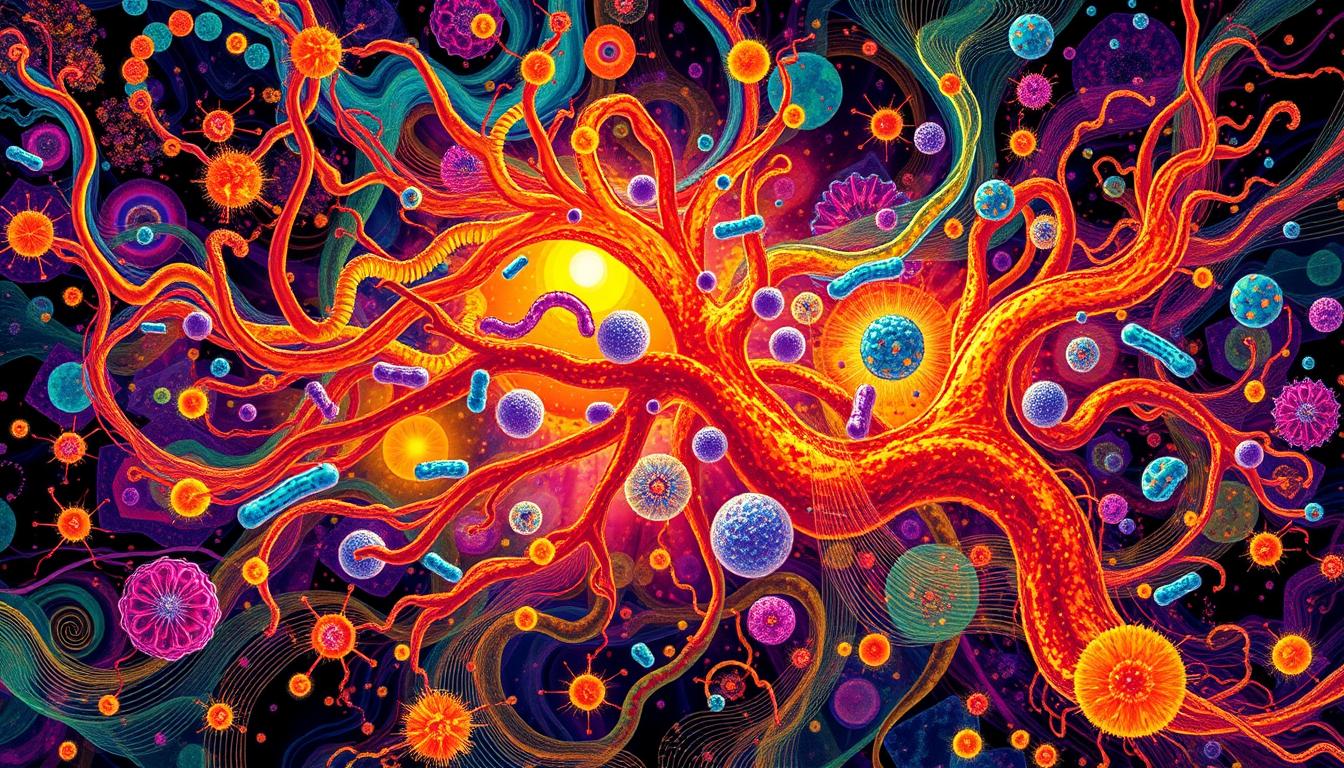
Our gut is key to our well-being, affecting both our physical and mental health. The connection between our gut and brain, known as the “gut-brain axis,” is fascinating. It shows how gut health impacts our mood, thinking, and energy.
The microbiome is at the center of this bond. It’s a mix of bacteria, viruses, and other tiny life forms in our gut. When balanced, it boosts our mental and physical health. But, an imbalance, or dysbiosis, can cause mood problems and low energy.
We’ll look into why gut health matters for your mood and energy. By learning about the gut-brain link and how diet, probiotics, and lifestyle affect it, you can improve your gut health. This can lead to better overall well-being.
Understanding Gut Health and Its Importance
Gut health is key to feeling good overall. It helps keep a balanced microbiome diversity, supports beneficial bacteria, and aids in digestive balance and immune system function. Our gut is filled with trillions of tiny helpers, working together for digestion, nutrient absorption, and fighting off sickness.
A healthy gut has many types of good bacteria. These bacteria help digest food, make important vitamins, and keep bad bacteria in check. But, if this balance gets upset, it can cause health problems like digestive issues, chronic inflammation, and mood swings.
“Gut health is the foundation of overall health and well-being. A diverse and thriving microbiome is essential for maintaining a strong immune system, proper nutrient absorption, and a balanced mood.”
Keeping your gut in balance is vital for absorbing nutrients and getting rid of waste. A healthy gut also boosts your immune system. Many immune cells live in the gut, ready to fight off sickness and control inflammation.
Knowing how important gut health is is the first step to better health. By nurturing a diverse and healthy gut microbiome, you can improve digestion, boost immunity, and enhance overall health.
The Gut-Brain Connection Explained
The connection between the gut and brain is quite interesting. It’s called the gut-brain axis. At its heart is the vagus nerve. This nerve is key for communication between the gut and brain.
The gut can send messages to the brain through the vagus nerve. These messages help make neurotransmitters like serotonin. Serotonin is important for mood, sleep, and feeling good.
The enteric nervous system, or “second brain,” works with the brain. It lets the gut and brain share information easily.
“The gut-brain axis is a bidirectional communication system, where the brain can influence the functions of the gut, and the gut can, in turn, send signals to the brain.”
Gut health affects our mood and emotions a lot. Problems in the gut can change how we feel. This can lead to mood disorders and other brain issues.

Learning about the gut-brain connection opens up new ways to feel better. Eating right, managing stress, and using special treatments can help. These actions can boost mood, energy, and brain function.
How Gut Health Influences Mood Disorders
Research has found a surprising link between our gut health and our mood. It shows that depression, anxiety, and other mood issues might be tied to gut inflammation and dysbiosis. This imbalance in our digestive system’s microorganisms is key.
The gut and brain talk to each other through the gut-brain axis. When our gut is inflamed or has an unhealthy balance, it can affect our brain. This might lead to mood disorders.
“The gut microbiome has a profound influence on brain function and behavior, and disruptions to this delicate ecosystem may be a key factor in the onset of depression and anxiety.”
Studies suggest that treatments targeting the gut could help with mood disorders. This includes probiotics and changing our diet. These methods might improve our gut health and reduce inflammation, easing depression and anxiety symptoms.
The study of gut health and mood is growing fast. It offers new ways to look at mental health. By exploring the gut-brain connection, we can improve our overall well-being and find new ways to manage mood disorders.
The Role of Diet in Gut Health
The foods you eat are key to keeping your gut healthy. Foods high in fiber, like fruits, veggies, and whole grains, are vital. They feed the good bacteria in your gut, helping it stay balanced.
Fermented foods, like yogurt and sauerkraut, are great for your gut too. They’re full of probiotics, which are live cultures that boost good bacteria. This helps reduce inflammation and improves digestion.
Following an anti-inflammatory diet can greatly improve your gut health. This diet focuses on fiber-rich foods, fermented foods, and gut-friendly nutrition. It helps fight inflammation, which is often the cause of gut problems.
“Gut health is the foundation of overall health, and the foods we eat play a vital role in maintaining a balanced and thriving gut microbiome.”
By choosing to eat fiber-rich foods, fermented foods, and following an anti-inflammatory diet, you can nourish your gut. This leads to a healthier, happier you.

Gut Health and Energy Levels
Your gut health is key to your energy levels. When your gut works well, it absorbs nutrients from food. This gives your body the fuel it needs to stay energized.
A bad gut can cause problems with nutrient absorption. This leads to feeling tired and having low energy. Poor gut health makes it hard for your body to use important nutrients, making you feel sluggish.
The connection between your gut and brain is also important for energy. The gut microbiome affects neurotransmitters like serotonin and dopamine. These neurotransmitters impact your mood and energy. An unbalanced gut can make you feel tired and slow.
To stay energized, keep your gut healthy. Eat well, exercise regularly, and manage stress. This helps your body absorb nutrients better, boosts metabolism, and keeps you feeling alive and full of energy.
The Impact of Stress on Gut Health
Our gut health is closely tied to our overall well-being. Stress can disrupt this balance. Chronic cortisol, the main stress hormone, can harm our gut, causing gut permeability or “leaky gut.” This lets harmful substances into our bloodstream, starting an stress response that can lead to health problems.
Stress weakens our gut’s defenses, making it more permeable. This can upset the balance of our gut microbiome. Harmful bacteria grow, while good ones are pushed aside. This can cause digestive issues, bloating, and even autoimmune diseases.
“Stress is one of the most significant contributors to poor gut health, as it disrupts the delicate balance of our gut microbiome and can lead to increased gut permeability.”
But, there are ways to manage stress and protect our gut. Meditation, yoga, and exercise can lower cortisol levels and help our gut. Eating foods that are good for our gut, like fermented items and fiber-rich fruits and veggies, also supports healing.

By understanding how stress affects our gut, we can take steps to improve our digestive health. Reducing stress and eating gut-friendly foods can greatly benefit our health and wellness.
The Benefits of Probiotics and Prebiotics
Keeping our gut healthy is key to feeling good. Probiotics and prebiotics are important for this. Probiotics are good bacteria in our gut that keep it balanced. They’re found in foods like yogurt, kefir, and sauerkraut. Eating these foods helps our digestion and boosts our immune system.
Prebiotics, on the other hand, feed the good bacteria in our gut. Foods like whole grains, bananas, onions, and garlic are full of prebiotics. They help our gut flora grow strong, leading to better digestion and mood.
“A healthy gut is the foundation for a healthy life. Incorporating probiotics and prebiotics into your diet is a simple, yet powerful way to support your gut health.”
A healthy gut does more than just help us digest food. It also affects our mood and brain function. Probiotics and prebiotics help grow good bacteria, which can fight depression and anxiety. They also give us more energy.
Eating more probiotic and prebiotic foods is easy and good for your gut. Enjoying yogurt, raw garlic, or kombucha can greatly improve your health. It’s a simple way to care for your gut and feel better overall.
Lifestyle Changes to Improve Gut Health
Keeping our gut healthy is more than just what we eat. Our lifestyle choices are key to supporting our gut. Making a few simple changes can greatly improve our digestive system’s health.
Exercise is great for our gut. It helps grow good bacteria, reduces inflammation, and keeps our digestive system working well. Try to do at least 30 minutes of moderate exercise, like brisk walking or cycling, most days.
Sleep hygiene is also vital for gut health. Good sleep helps our body rest, repair, and regulate digestion. Aim for 7-9 hours of sleep each night and keep a regular sleep schedule for better gut health.
Drinking enough water is another important factor. Water helps break down and absorb nutrients, keeps bowel movements regular, and removes toxins. Drink at least eight 8-ounce glasses of water a day, adjusting as needed based on your activity level.
Mindful eating can also help our gut. Eating slowly, chewing well, and being present during meals improves digestion and nutrient absorption. Try to eat without distractions, like screens, during meals.
By adding regular exercise, good sleep, enough water, and mindful eating to your routine, you can boost your gut health. This can lead to better mood, more energy, and overall well-being.

Recognizing Signs of Poor Gut Health
Your gut health is key to your overall well-being. It affects your digestion, mood, and energy. Many people face symptoms of poor gut health. Knowing these signs is the first step to better health.
Signs of poor gut health include digestive issues like bloating, gas, and constipation. If you often deal with these, your gut is not okay. Food sensitivities also hint at gut problems, as your body may struggle with certain foods.
Poor gut health can also show up in skin problems. Issues like acne and eczema might be linked to gut imbalances. And if you often feel anxious or depressed, your gut could be a factor. The gut and brain are closely connected, affecting your mood and emotions.
“A healthy gut is the foundation for a healthy body and mind.” – Dr. Sarah Ballantyne, author of “The Paleo Approach”
If you notice these signs, see a healthcare professional. They can find the cause and help you fix your gut health. This is a big step towards feeling better overall.
Conclusion: Taking Control of Your Gut Health
We’ve looked at how gut health affects our overall well-being. It impacts our mood, energy, and helps prevent long-term health problems. Now, you know how to improve your gut health by understanding the gut-brain connection and the importance of diet, probiotics, and lifestyle.
Improving gut health is key to living a balanced, vibrant life. By eating a fiber-rich diet, managing stress, and using probiotics, you can benefit from a healthy gut. Remember, a healthy gut is essential for both your physical and mental health.
Starting your journey to better gut health is exciting. But remember, everyone’s needs are different. Talk to healthcare experts to create a plan that fits you. With hard work and focus on your gut health, you can achieve holistic well-being and reach your full potential.